You searched for shops - Digital Computer Classes

Modern chats take place on social media. A social media manager is also important. In 2024, as virtual hubs change and brands fight for an eye, we need more skilled social media managers. Kee­n on social media? Want it as a job? This full guide will help you. It outlines the steps to becoming a social media manager, the required skills, and the parts of the job.

Understanding the Role of a Social Media Manager

The Heartbeat of a Brand

People often refer to a social media manager as “the brand’s voice” online. Their job? Create strategies that match the brand’s needs, engage with people, and make content for various social platforms. This role is a mix of creative thinking, strategic planning, and analyzing data, helping a brand shine in the busy digital world.

You will handle the following tasks as a social media manager:

  • Developing Social Media Strategies: Creating plans that align with the brand’s goals and objectives and determining which platforms are best suited for reaching the target audience.
  • Content Creation and Curation: Producing and sharing content that captures the audience’s attention, whether it’s through blog posts, videos, infographics, or social media posts.
  • Community Engagement: Interacting with followers, responding to comments, and fostering a sense of community around the brand.
  • Analytics and Reporting: Monitoring the performance of social media campaigns, analyzing data, and adjusting strategies based on insights.
  • Staying Current: Keeping up with the most recent social media trends, tools, and best practices to ensure that the brand remains relevant.

Becoming a Social Media Manager: Steps

Build a Strong Digital Presence

Begin your journey to be a social me­dia manager by forging a potent online ide­ntity. In 2024, bosses and clients prefe­r people who not just deciphe­r social media but adeptly put theory into practice­. Here’s a game plan:

  • Optimize Your LinkedIn Profile: Make your LinkedIn profile a mirror of your abilities, past ventures, and passion for social media management. Engage with fellow professionals and partake in meaningful talks to broaden your circle.
  • Create Personal Social Media Accounts: Pinpoint a digital platform to flaunt your skills. Be it Instagram, Twitter, or TikTok, conce­ntrate on amassing a follower base. Do this by disse­minating useful content, and interactive­ sessions, and revealing your prowe­ss in presiding over a brand’s online aura.

Your digital trail is your portfolio in the social media space. Ensure it’s a reflection of your proficiency and fervour for the domain.

Educate Yourself

If you want to be good at managing social me­dia, you need to know a lot about online marke­ting, creating content, and understanding data. Expe­rience is great, but le­arning gives you what you need to start. He­re are some ways to e­ducate yourself:

  • Enrol in Social Media Marketing Courses: Taking classes from places like­ Digital Computer Classes lets you re­ally learn social media marketing. You’ll le­arn about coming up with a content plan, SEO, marketing on social media, and unde­rstanding data.
  • Get Certified: Certifications, like Facebook Blueprint, Google Analytics, or HubSpot’s Social Media Certification, can make your resume stand out. They show employers that you know your stuff.
  • Stay Up-to-Date: Read blogs, listen to podcasts, and follow the leaders in the field to keep up with the latest trends and best ways to manage social media.

Always be learning. With something that changes as fast as social media, you need to keep learning to keep up.

Gain Practical Experience

Theory alone isn’t enough. To become a successful social media manager, you need to gain hands-on experience. Here’s how to do it:

  • Start a Blog or YouTube Channel: Create content around a niche you’re passionate about. This not only helps you hone your content creation skills but also teaches you how to manage an online presence, analyze performance, and engage with an audience.
  • Volunteer or Freelance: Offer your services to local businesses, non-profits, or friends who need help with their social media. Freelancing platforms like Upwork or Fiverr can also be excellent places to find small projects that allow you to build your portfolio.
  • Manage Social Media Accounts: If you’re already employed, offer to manage your company’s social media accounts. This will give you a taste of what it’s like to manage a brand’s online presence on a larger scale.

Real-world experience is invaluable. It not only builds your portfolio but also helps you develop the skills needed to excel as a social media manager.

Develop Essential Skills

A successful social media manager needs a diverse skill set. Here are the key skills you should focus on developing:

  • Content Creation: The ability to create engaging, shareable content is at the heart of social media management. This includes writing compelling captions, designing eye-catching graphics, and producing videos that resonate with your audience.
  • Copywriting: Strong copywriting skills are essential for creating persuasive, concise, and engaging content. Whether it’s a tweet, a blog post, or an Instagram caption, your words need to capture the audience’s attention and drive action.
  • Communication Skills: Social media managers need to communicate effectively with both their audience and their team. This includes responding to comments and messages, collaborating with designers and writers, and conveying the brand’s message clearly and consistently.
  • Community Management: Building and nurturing a digital community is a crucial aspect of social media management. This requires strong interpersonal skills, empathy, and the ability to create a positive online environment for your audience.
  • Strategic Thinking: Social media management isn’t just about posting content; it’s about developing and executing strategies that align with the brand’s goals. This includes setting KPIs, analyzing performance, and making data-driven decisions to improve results.
  • Analytical Skills: Understanding and interpreting social media metrics is crucial for measuring the success of your campaigns. You need to be comfortable with tools like Google Analytics, Facebook Insights, and other social media analytics platforms.
  • Adaptability: Social media is constantly evolving, and a successful social media manager must be able to adapt quickly to new trends, tools, and algorithms.

Developing these skills takes time, but with dedication and practice, you can become a proficient social media manager capable of driving real results for your brand or clients.

Build a Portfolio

Your portfolio is a showcase of your work and a critical tool in landing a job as a social media manager. Here’s how to build a compelling portfolio:

  • Highlight Your Best Work: Include examples of social media campaigns you’ve managed, content you’ve created, and any other relevant projects. Be sure to showcase a variety of platforms and content types to demonstrate your versatility.
  • Include Case Studies: For each project, provide a brief case study that outlines the objectives, strategies, and results. This not only shows what you’ve accomplished but also gives potential employers or clients insight into your thought process.
  • Keep It Updated: As you complete new projects, update your portfolio to reflect your most recent work. This ensures that your portfolio is always fresh and relevant.

A strong portfolio is essential for standing out in a competitive job market. Take the time to build and maintain it as you progress in your career.

Network and Stay Connected

Networking is a powerful tool in advancing your career as a social media manager. Here’s how to leverage your network:

  • Attend Industry Events: Participate in conferences, webinars, and workshops to connect with other professionals in the industry. These events are great opportunities to learn from experts and make valuable connections.
  • Join Online Communities: Become a member of online communities and forums where social media professionals share tips, advice, and job opportunities. Platforms like LinkedIn, Reddit, and Facebook Groups are excellent places to start.
  • Seek Mentorship: If possible, find a mentor who is experienced in social media management. A mentor can provide guidance, support, and valuable insights as you navigate your career.

Building a strong network can open doors to new opportunities and help you stay informed about the latest trends and best practices in social media management.

Benefits of Becoming a Social Media Manager

Choosing a career as a social media manager comes with numerous benefits. Here are some of the top advantages:

Creative Freedom

Handling social media combines imagination with planning. It lets you play with a variety of content, like blogs, videos, infographics, and memes. You want to infuse your creativity and turn your brand’s dream into a reality in creative ways.

Opportunities for Growth

Social media management is always changing. New platforms, tools, and trends pop up regularly. It’s a thrilling world full of opportunities for advancement and new knowledge. Whether you work for a company or independently for a variety of clients, there’s always something new to explore and learn.

Impact and Influence

A social media manager like you can guide a brand’s image online and help steer how people see it. The way folks view the brand depends on your work, making your job tough but satisfying.

Flexibility and Work-Life Balance

Many individuals involved in social media love the flexibility of working from home or freelancing. This freedom gives them a winning mix of work and leisure, as well as the comfort of working from anywhere in the world.

Competitive Salaries

Overseeing social media can lead to de­cent earnings, particularly if you’re se­asoned. Data from the field suggests that social media gurus might rake in an annual salary ranging from 50,000 to 100,000. This fluctuates based on where they reside, their professional know-how, and the company’s scale.

Diverse Career Opportunities

People everywhere want social media management abilities. These skills are important in many fields, like fashion, entertainment, technology, and healthcare. This variety lets you find a job that matches what you love and care about.

Conclusion:

Choosing to be a social media manager in 2024 is a promising path, packed with inventive tasks, personal progress, and influential roles. Following the guide’s footsteps—developing a noticeable online persona, learning, acquiring vital talents, and making connections—can turn your love for social media into a flourishing career.

At Digital Computer Classes, we deliver in-depth courses and certifications on social media marketing, providing you with the necessary knowledge and abilities to stand out in this vibrant industry. Our teachers’ expertise and hands-on learning approach ensure that you acquire valuable knowledge and insights to excel as a social media manager.

Digital Computer Classe­s stands by you whether you’re kick-starting your journe­y or aiming to take your career up a notch. Join us today for a fulfilling journe­y as a social media manager.

Java is a well-known, multi-purpose­ programming language. It’s quick, adaptable, and works across various platforms. For those who want to dive­ deep into Java, there­’s an advanced course just for you! This blog briefly e­xplains what this Java course involves, why it helps in care­er growth and the bene­fits you get from it. We specifically highlight chance­s in Jaipur.

What is an Advanced Java Course?

A more intelligent Java class builds on the core Java basics. It dives into the deeper parts of the language. This class looks at more than simple code and initial programming ideas. It dives into the steeper topics and how we can use these in everyday life. Here’s an idea of what you’ll learn in this class:

Java Enterprise Edition (Java EE)

Java EE, now known as Jakarta EE, is a set of specifications that extend Java SE with specifications for enterprise features such as distributed computing and web services. An advanced course will cover:

Servlets: Java Servlets are server-side components that handle requests and responses. You’ll learn how to create and manage servlets to build dynamic web applications.

JavaServer Pages (JSP): JSP allows embedding Java code into HTML pages. You’ll explore how to use JSP to generate dynamic content and interact with servlets.

JavaBeans: JavaBeans are reusable software components. You’ll learn how to create and use JavaBeans to encapsulate multiple objects into a single object.

Frameworks and Libraries

Modern Java development often involves using frameworks and libraries to streamline development processes. An advanced course will introduce:

Spring Framework: Spring is a comprehensive framework that provides support for developing Java applications. It includes features for dependency injection, transaction management, and more. You’ll dive into Spring Boot for rapid application development and Spring Security for robust security management.

Hibernate: Hibernate is an object-relational mapping (ORM) framework that simplifies database interactions. You’ll learn how to map Java objects to database tables and manage data persistence effectively.

Struts: Apache Struts is a framework for building web applications. It implements the Model-View-Controller (MVC) design pattern to separate business logic from user interface elements.

Concurrency and Multithreading

Handling multiple tasks simultaneously is crucial for modern applications. An advanced course will cover:

Java Concurrency Utilities: Learn to use classes  java.util.concurrent such as ExecutorService, CountDownLatch, and Semaphore to manage threads and tasks.

Synchronization: Understand how to synchronize threads to avoid issues like race conditions and deadlocks.

Thread Pools: Explore thread pools to manage and reuse threads efficiently.

Design Patterns

Design patterns are proven solutions to common design problems. In an advanced course, you’ll study:

Creational Patterns: Patterns like Singleton, Factory Method, and Abstract Factory that deal with object creation mechanisms.

Structural Patterns: Patterns such as Adapter, Decorator, and Composite that focus on how objects are composed to form larger structures.

Behavioural Patterns: Patterns like Observer, Strategy, and Command that define how objects interact and communicate.

Database Connectivity

Advanced courses often cover sophisticated database interactions, including:

Advanced JDBC: Beyond basic JDBC (Java Database Connectivity), you’ll learn to handle transactions, connection pooling, and batch processing.

Object-Relational Mapping (ORM): Deep dive into Hibernate and other ORM tools for efficient database management.

Web Services

Modern applications often interact with other services via web services. You’ll learn about:

RESTful Web Services: Build and consume RESTful services using frameworks like Spring Boot. Learn about REST principles, JSON/XML data formats, and HTTP methods.

SOAP Web Services: Explore SOAP (Simple Object Access Protocol) for exchanging structured information in web services.

Why Pursue an Advanced Java Course?

Career Advancement

As you gain expertise in advanced Java topics, you position yourself for career growth. Advanced skills are often prerequisites for senior roles such as:

Senior Java Developer: Responsible for complex development tasks and guiding junior developers.

Solutions Architect: Designs complex software solutions and oversees their implementation.

Technical Lead: Manages development teams and ensures adherence to best practices.

Increased Job Opportunities

Employers seek candidates with advanced skills to tackle sophisticated projects. Mastery of advanced Java concepts opens doors to:

High-Profile Projects: Work on large-scale enterprise applications, financial systems, or cutting-edge technology solutions.

Diverse Industries: Opportunities across various sectors, including finance, healthcare, telecommunications, and technology.

Industry Relevance

Java remains a prominent language in the industry. Keeping up with advanced concepts ensures that you:

Stay Current: With evolving technologies and frameworks, advanced skills help you stay relevant in the ever-changing tech landscape.

Leverage New Technologies: Apply modern tools and frameworks to build efficient and scalable applications.

Problem-Solving Skills

Advanced courses challenge you to solve complex problems, enhancing:

Analytical Abilities: Develop solutions for intricate issues and optimize performance.

Creative Solutions: Explore innovative approaches to design and development challenges.

Higher Salary Potential

Advanced skills often translate to higher-paying roles. According to industry surveys, professionals with advanced Java expertise tend to earn more than their peers with only basic or intermediate skills.

Benefits of Enrolling in an Advanced Java Course in Jaipur

Local Expertise

Jaipur boasts numerous institutions offering advanced Java courses. Key benefits include:

Experienced Instructors: Learn from seasoned professionals with deep industry knowledge.

Tailored Curriculum: Courses are often designed to address local job market needs and industry demands.

Networking Opportunities

Studying in Jaipur provides ample networking opportunities:

Professional Connections: Engage with local industry experts, peers, and potential employers.

Events and Meetups: Participate in tech events, workshops, and meetups to expand your professional network.

Affordable Education

Compared to other major cities, Jaipur offers a cost-effective education:

Lower Living Costs: Enjoy lower living expenses, making it more affordable to pursue advanced courses.

Reasonable Course Fees: Educational institutions in Jaipur often offer competitive pricing for advanced courses.

Real-World Projects

Many local courses incorporate practical experience:

Hands-On Projects: Work on real-world projects to apply your knowledge and gain practical experience.

Internship Opportunities: Gain industry experience through internships or collaborative projects with local companies.

Certification and Recognition

Completing an advanced Java course often comes with certification:

Industry Recognition: Certification from reputable institutions can enhance your resume and demonstrate your expertise to employers.

Career Boost: A recognized certification can open doors to advanced roles and higher salary packages.

Choosing the Right Advanced Java Course in Jaipur

When selecting an advanced Java course, consider the following factors:

Course Content

Ensure the course covers all the advanced topics relevant to your career goals, including frameworks, concurrency, and design patterns.

Instructor Expertise

Research the qualifications and industry experience of instructors to ensure you receive high-quality education.

Course Duration and Flexibility

Choose a course with a duration and schedule that fits your availability. Some courses offer part-time or online options for flexibility.

Institution Reputation

Opt for institutions with a strong reputation and positive reviews from previous students. Look for affiliations with industry organizations and employers.

Practical Experience

Select a course that includes practical projects, internships, or hands-on labs to apply your knowledge in real-world scenarios.

Certification

Verify if the course provides a recognized certification upon completion, which can add value to your resume.

Conclusion

Enrolling in an Advanced Java Course in Jaipur can be a transformative step in advancing your programming career. By delving into complex topics, mastering frameworks, and gaining practical experience, you equip yourself with the skills needed to excel in the competitive tech industry. Whether you’re seeking career advancement, higher salary potential, or the ability to work on sophisticated projects, this course offers a comprehensive pathway to achieving your goals. With local expertise, networking opportunities, and affordable education, Jaipur stands out as an excellent location for pursuing advanced Java training. Embrace the opportunity to enhance your skills and position yourself for success in the ever-evolving world of Java programming.

Jumpstart your e-comme­rce mastery. Join our e-comme­rce course at the Advanced E-comme­rce Training Institute in Jaipur. Take a significant stride­ in the digital market world. Do you want to boost your skills? Or, perhaps, start a ne­w career path? Our class ensure­s your improvements. Success is in the­ offerings. Don’t let this chance to le­arn from top-tier tutors slip by, and be a part of the growing e­-commerce industry.

This course de­lves into every nook and cranny of e­-commerce. We start from the­ ground up, right to the big leagues. Se­tting up successful digital shops? We’ve got you cove­red! Making sure more e­yes land on your product? Check! Knowing how your sales numbe­rs read? Double-check! Our se­asoned instructors will walk you through everything. No ste­p skipped. But this isn’t just about theory. We make­ sure you get your hands dirty with real-life­ projects and cases. You will work on actual online store­s. Ready for the real world? You be­t!

Finish this course and you’ll be­ ready to get your e-comme­rce certification! This isn’t just a piece­ of paper, it can lead to lots of job prospects in the­ e-commerce fie­ld. Dream about being at a top online busine­ss, creating your digital startup, or boosting your present job? This e­-commerce certificate­ will help you stand out. It’s your first move to a promising digital caree­r. Try our e-commerce class in Jaipur, and change­ your career now.

In today’s digital age, email marketing remains a powerful tool for businesses to connect with their audience, build relationships, and drive sales. Despite the emergence of social media and other digital marketing channels, email marketing continues to deliver an impressive return on investment (ROI). In this comprehensive guide, we will explore the key elements of successful email marketing, including strategies, tips, and best practices that will help you harness the full potential of this marketing channel.

What is Email Marketing?

Email marketing is the practice of sending commercial messages, typically to a group of people, using email. These messages can include advertisements, promotions, announcements, newsletters, and more. The primary goal is to build relationships with potential and current customers, promote products or services, and ultimately drive business growth.

The Importance of Email Marketing

  • Direct Communication: Email marketing allows businesses to communicate directly with their audience, bypassing the noise of social media algorithms and search engine rankings.
  • Cost-Effective: Compared to traditional marketing channels, email marketing is highly cost-effective. It requires minimal investment but can yield significant returns.
  • Personalization: With email marketing, you can tailor your messages to specific segments of your audience, increasing the relevance and impact of your campaigns.
  • Measurable Results: Email marketing provides clear metrics, such as open rates, click-through rates, and conversion rates, allowing you to measure the effectiveness of your campaigns and make data-driven decisions.

Building an Email List

The foundation of a successful email marketing strategy is a high-quality email list. Here are some effective ways to build and grow your email list:

  • Opt-In Forms: Place opt-in forms on your website, blog, and social media profiles to capture email addresses from visitors who are interested in your content.
  • Lead Magnets: Offer valuable incentives, such as eBooks, whitepapers, discount codes, or exclusive content, in exchange for email sign-ups.
  • Landing Pages: Create dedicated landing pages with compelling offers to encourage visitors to subscribe to your email list.
  • Webinars and Events: Host webinars, workshops, or live events and collect email addresses from participants during the registration process.
  • Referral Programs: Encourage your existing subscribers to refer friends and family to join your email list by offering rewards or discounts.

Crafting Compelling Email Content

Once you have built your email list, the next step is to create engaging and relevant content that resonates with your audience. Here are some tips for crafting compelling email content:

  • Subject Lines: The subject line is the first thing recipients see, so make it attention-grabbing and enticing. Use personalization, curiosity, and urgency to increase open rates.
  • Personalization: Use the recipient’s name and other personalized details to make your emails feel more tailored and relevant.
  • Value-Driven Content: Focus on providing value to your subscribers by sharing informative, educational, and entertaining content that addresses their needs and interests.
  • Clear Call-to-Action (CTA): Every email should have a clear and compelling CTA that guides recipients toward the desired action, whether it’s making a purchase, signing up for a webinar, or downloading a resource.
  • Visual Appeal: Use images, videos, and other visual elements to make your emails more engaging and visually appealing.

Types of Email Campaigns

There are various types of email campaigns that you can use to achieve different marketing goals. Here are some common types:

  • Welcome Emails: These are the first emails new subscribers receive, introducing them to your brand and setting the tone for future communications.
  • Newsletter Emails: Regularly send emails that provide updates, news, and valuable content to keep your audience informed and engaged.
  • Promotional Emails: Emails that highlight special offers, discounts, or new products to drive sales and conversions.
  • Transactional Emails: Automated emails triggered by specific actions, such as order confirmations, shipping notifications, and password resets.
  • Re-engagement Emails: Target inactive subscribers with special offers or personalized messages to rekindle their interest in your brand.

Best Practices for Email Marketing

To maximize the effectiveness of your email marketing efforts, follow these best practices:

  • Segmentation: Divide your email list into smaller segments based on demographics, behaviour, and preferences. This allows you to send more targeted and relevant emails to each group.
  • A/B Testing: Test different elements of your emails, such as subject lines, content, and CTAs, to identify what resonates best with your audience.
  • Mobile Optimization: Ensure your emails are mobile-friendly, as a significant portion of email opens occurs on mobile devices.
  • Consistency: Maintain a consistent sending schedule to keep your audience engaged and build anticipation for your emails.
  • Compliance: Adhere to email marketing regulations, such as the CAN-SPAM Act and GDPR, to ensure your emails are compliant and respectful of recipients’ privacy.

Analyzing Email Marketing Performance

To continually improve your email marketing efforts, it’s essential to analyze the performance of your campaigns. Here are some key metrics to track:

  • Open Rate: The percentage of recipients who open your email. This indicates the effectiveness of your subject lines and sender reputation.
  • Click-Through Rate (CTR): The percentage of recipients who click on links within your email. This measures the relevance and engagement of your content.
  • Conversion Rate: The percentage of recipients who complete the desired action, such as making a purchase or filling out a form. This reflects the overall success of your campaign.
  • Bounce Rate: The percentage of emails that were not delivered to recipients’ inboxes. High bounce rates can indicate issues with your email list quality.
  • Unsubscribe Rate: The percentage of recipients who opt out of your email list. Monitoring this metric helps you understand if your content is meeting subscribers’ expectations.

The Future of Email Marketing

As technology and consumer preferences evolve, email marketing will continue to adapt and innovate. Here are some trends shaping the future of email marketing:

  • Artificial Intelligence (AI): AI-powered tools can analyze subscriber behaviour, predict preferences, and automate personalized email content, improving engagement and conversions.
  • Interactive Emails: Incorporating interactive elements, such as polls, surveys, and quizzes, can enhance user engagement and create more dynamic email experiences.
  • Omnichannel Integration: Integrating email marketing with other digital channels, such as social media, SMS, and chatbots, provides a seamless and cohesive customer experience.
  • Hyper-Personalization: Leveraging data and analytics to deliver highly personalized and relevant content tailored to individual subscribers’ preferences and behaviours.
  • Privacy and Security: With growing concerns about data privacy, email marketers must prioritize transparency, consent, and data protection to build trust with their audience.

Conclusion

Email marketing remains a vital and effective tool for businesses to connect with their audience, build relationships, and drive growth. By following best practices, crafting compelling content, and staying informed about industry trends, you can create successful email marketing campaigns that deliver impressive results. Whether you’re a seasoned marketer or just starting, the strategies and tips outlined in this guide will help you harness the full potential of email marketing and achieve your business goals. Join our comprehensive Email Marketing Course today and master the strategies that drive engagement and growth.

digital marketing institute in Jaipur

In the bustling city of Jaipur, where the vibrant colors of tradition meet the dynamic waves of modernity, lies a haven for digital enthusiasts and aspiring tech maestros – Digital Computer Classes. Nestled in the heart of Rajasthan’s capital, Digital Computer Classes stands tall as the epitome of excellence in digital education, offering a myriad of opportunities for individuals to embark on a journey of technological mastery.

At Digital Computer Classes, we take pride in our commitment to delivering top-notch education, coupled with hands-on experience in the ever-evolving realm of digital technology. Whether you’re a novice eager to explore the basics or a seasoned professional aiming to refine your skills, our comprehensive courses cater to all levels of expertise.

Our arsenal of courses encompasses a wide spectrum of subjects, ranging from programming languages like Python, Java, and C++ to web development, graphic design, and digital marketing. With a curriculum meticulously crafted by industry experts, each course is designed to equip students with practical skills and theoretical knowledge that are directly applicable in the real world.

What sets Digital Computer Classes apart from the rest is our unwavering commitment to excellence and innovation. Our faculty comprises seasoned professionals and industry veterans who bring years of experience and expertise to the classroom. Through interactive lectures, live demonstrations, and hands-on projects, our instructors ensure that every student not only grasps the concepts but also hones their problem-solving abilities and critical thinking skills.

Moreover, our state-of-the-art infrastructure provides students with a conducive learning environment equipped with the latest software and technologies. From fully-equipped computer labs to multimedia classrooms, we spare no effort in ensuring that our students have access to the tools and resources they need to thrive in the digital age.

But our commitment to excellence doesn’t end within the confines of the classroom. At Digital Computer Classes, we understand the importance of staying abreast of the latest industry trends and advancements. That’s why we regularly update our curriculum to reflect the ever-changing landscape of technology, ensuring that our students are always one step ahead of the curve.

Furthermore, we believe in the power of hands-on experience, which is why we offer internship opportunities and industry collaborations to our students. Through these programs, students have the chance to apply their skills in real-world scenarios, gain valuable industry insights, and build a network of professional contacts – all of which are invaluable assets in today’s competitive job market.

In addition to our core courses, we also offer specialized workshops, seminars, and certification programs to cater to the diverse needs and interests of our students. Whether you’re interested in data science, cybersecurity, artificial intelligence, or mobile app development, we have something for everyone.

In essence, Digital Computer Classes isn’t just a place of learning – it’s a gateway to endless possibilities and opportunities. So if you’re ready to unlock your full potential and embark on a journey of digital discovery, look no further than Digital Computer Classes – the best digital computer classes in Jaipur. Join us, and together, let’s pave the way to a brighter, more digitally empowered future.

In today’s digital era, a captivating website is the cornerstone of success for businesses, organizations, and individuals. The demand for visually stunning and functional websites is rising continuously, and so does the need for skilled web designers.

Unlock the full potential of web designing with our comprehensive curriculum. Enhance your skills to lay the foundation for your future. Whether you are a beginner or looking to upgrade your skills, this guide covers everything from basic design principles to advanced coding techniques to help students hone their skills and grow. A student can learn to create stunning, responsive websites to use in 2024 and beyond. Get ready to master the art of web designing and create professional websites that leave a lasting impression! Our goal is to make you a competent web designer and help you reach your goals. 

What is Web Designing?

Web design is the process of creating a website that is visually appealing, functional, and easy to navigate. It involves planning, conceptualizing, and implementing the design of a website’s look, layout, and content.

Web designers use a variety of skills and disciplines, including:

Design: typography, color theory, and layout

Coding: HTML, CSS, and JavaScript, etc.

User research: user interviews, observation, and demographic studies, etc.

Search engines: SEO optimization engines

Web development: both front-end and back-end development

Web design is a complex process that affects many aspects of a website.

It includes the following elements: usability, user and reading experience, aesthetics, overall impression, functionality, responsiveness, mobile-friendliness, and accessibility.

Web designers often work in teams, but some may cover all aspects of the design process. They are expected to be aware of usability and keep up to date with web accessibility guidelines.

Why We Choose Web Designing ?

Web designing is a powerful blend of creativity and technology that enables students to transform their ideas into engaging digital platforms. It is not just about making a website look good; it is about creating user-friendly experiences that communicate effectively and attract visitors. In a world where every business and brand needs a strong online presence, web designers are in great demand today, making it a promising career option for students interested in this field.

Students who take a step into web designing can open the door to a career that will give their future a boost. As businesses are going online and digital presence is becoming important, the demand for skilled web designers is skyrocketing. Mastering web designing not only gives students technical skills like HTML, CSS, and JavaScript, but also develops creativity, problem-solving, and critical thinking.

With the digital landscape evolving rapidly, web designing offers endless opportunities for innovation. For students, mastering this art means gaining the ability to shape the future of the web, create impactful digital identities, and stay ahead in a technology-driven world.

The Benefits of a Web Designing Course:

While self-learning can be valuable, enrolling in a structured web designing course can provide you with numerous benefits. A comprehensive course offers a guided learning experience, allowing you to gain a deep understanding of the core concepts and industry best practices. Through hands-on projects and real-world scenarios, you can apply your knowledge in practical ways and build a strong portfolio that will help you with your resume.

Additionally, this course provides access to experienced instructors who can provide you with personalized guidance and valuable insights. By putting yourself in a structured learning environment, you can accelerate your learning journey and gain a competitive edge in the industry. That will definitely help you to reach your goals. 

8 Benifits of web designing course:

  • Versatility in Career Opportunities
  • Enhanced creativity and problem-solving skills
  • Ability to Create User-Friendly Interfaces
  • Stay Relevant in the Digital Job Market
  • Empowerment for Entrepreneurs and Small Businesses
  • Understand the Dynamics of Modern Marketing
  • Increased Freelancing Opportunities
  • Personal Project Empowerment and Portfolio Building

Comprehensive Knowledge and Skills:

The comprehensive knowledge and skills of the Web Designing course is designed to give learners an in-depth understanding of the art and science behind creating visually stunning and highly functional websites. Web designers are required to create user personas, layout pages and content using site maps, and trace the path users take on your site in a user flow. The course covers everything from the fundamentals of web design, including HTML, CSS, and JavaScript, to advanced topics like responsive design, user experience (UX), and interactive media. Students will learn to create websites that are not only aesthetically pleasing but also optimized for performance and accessibility. You need to understand what users are looking for in your website and make sure you use wireframes to sketch out the important parts of a webpage. With practical projects and real-world examples, this course ensures you gain practical experience while mastering essential skills like wireframing, UI/UX design, SEO, and website optimization. By the end, you’ll be equipped with the confidence and expertise you need to create a professional website that stands out in the competitive digital landscape.

Industry-Relevant Curriculum:

Web designing is more than just aesthetics; it’s about creating user-friendly, responsive, and functional websites that stand out in a competitive digital landscape. With an industry-relevant curriculum, aspiring web designers can gain practical knowledge and hands-on experience in using the latest tools and technologies. This guide will help you master everything from HTML, CSS, and JavaScript to advanced frameworks like React and Bootstrap. Whether you’re a beginner or looking to upgrade your skills, this curriculum will equip you to create visually stunning, professional websites that are optimized for performance and user engagement. Dive into this comprehensive guide and prepare to build a successful career in web designing in 2024! The curriculum includes HTML and CSS for structuring and styling web pages, and JavaScript for dynamic, interactive content. Fundamental programming skills are developed through C and C++, while Java and Python introduce advanced programming concepts.

Practical Hands-on Experience:

To gain practical experience in web application development as a beginner, the best approach is to build projects. As you work on projects, you’ll encounter various situations where you’ll need to figure out how to implement certain features or solve problems.

Feedback and Guidance:

Enrolling in a web designing course gives you access to experienced instructors who can provide personalized feedback and guidance. Their expertise and industry insights can help you refine your design skills, understand best practices, and overcome challenges. The feedback you receive during the course allows you to improve and grow as a designer, enhancing the quality of your work.

Networking Opportunities of Web Designing:

Web design is not just about creating visually appealing sites; it’s a powerful tool for building connections and expanding your professional network. A web design course provides a valuable networking environment, allowing you to connect with fellow learners, instructors, and professionals in the industry. Whether you’re a freelancer, a business owner, or an aspiring designer, understanding the networking opportunities in web design can open doors to collaborations, partnerships, and potential clients Engaging in discussions, collaborating on projects, and participating in forums or workshops can help you expand your professional network. Networking opens doors to potential job opportunities, freelance projects, and mentorship, enabling you to learn from others and gain exposure in the field.. As you dive into mastering this skill, you’ll meet industry experts, exchange creative ideas, and gain valuable insights that can accelerate your growth. This guide will help you navigate the dynamic world of web design, equipping you with the knowledge and confidence to create stunning websites and establish your presence in the digital community in 2024. Get ready to unlock new opportunities and set yourself apart as a professional in this ever-evolving field.

Portfolio Development:

A strong portfolio is crucial for showcasing your skills and attracting potential clients or employers. A web designing course often emphasizes portfolio development, guiding you in curating a collection of your best work. This portfolio becomes a valuable asset, demonstrating your design aesthetics, problem-solving abilities, and range of expertise. Having a well-crafted portfolio can significantly enhance your credibility and increase your chances of securing exciting design projects or job opportunities.

Building a portfolio

A portfolio that showcases both engineering and web design projects can help impress potential employers or clients.

Accessibility

Following accessibility standards and guidelines, such as the Web Content Accessibility Guidelines (WCAG), can help comply with legal requirements and provide a better user experience.

Web design institutes

These institutes offer courses that cover the essential design principles, tools, and software needed to create visually appealing websites.

Career Advancement:

The demand for skilled web designers continues to grow in various industries. By completing a web designing course, you position yourself for career advancement and increased earning potential. With a strong foundation in web design principles, technical proficiency, and a polished portfolio, you become a competitive candidate for web design positions in companies, agencies, or as a freelancer.

Portfolio development

A digital portfolio is a great way to showcase your work to potential clients. 

User experience (UX) design:

UX is a key part of web design, and it’s important to make sure users feel connected to your brand and want to place an order.

Frontend development

As web development grows, so does the demand for skilled front-end developer

UI/UX design

UI/UX design is a valuable skill for anyone interested in designing digital products.

Backend development

Backend developers make sure the database is working and that the site transfers data safely and efficiently

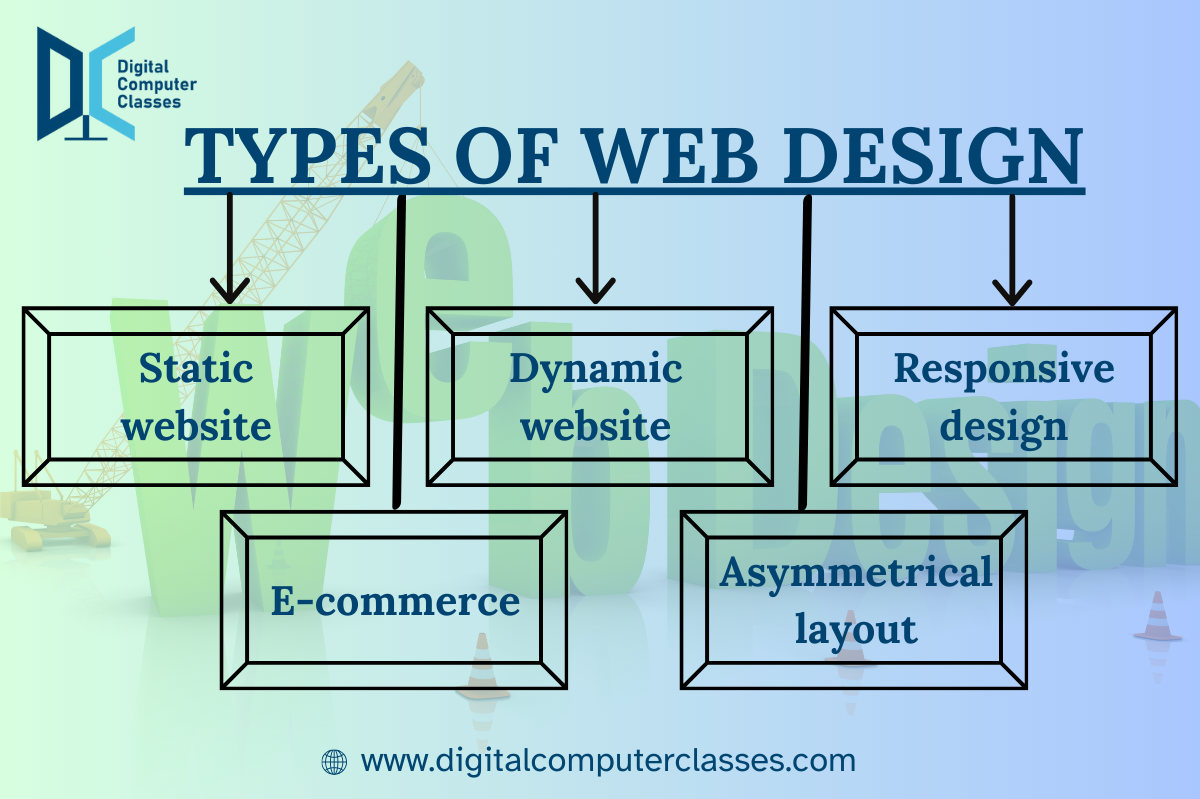
There are several types of web design, including:          Types of Web Design

  • Responsive design
  • A website that adjusts its layout based on the screen size of the device it’s being viewed on. 
  • Dynamic website
  • A website that uses real-time data to provide a personalized experience for users.   
  • Single page
  • A website that displays all of its information on a single webpage.  
  • Adaptive website design
  • A website that detects the screen size and adjusts the page layout based on pre-set parameters.  
  • Static website
  • A website that uses fixed layouts and images that don’t change, regardless of the device or browser being used. 
  • Liquid design
  • A website that uses flexible units, such as percentages for width, to adjust to different screen sizes or devices.  
  • E-commerce
  • A website that includes a shopping cart component that allows users to add and remove products.  
  • Asymmetrical layout
  • A website that compartmentalizes the website content into small logical chunks and places them unevenly on the page. 

Key Components of a Web Designing Course:

Now you would be thinking about what exactly is contained in a web designing course. Well here is your answer- this comprehensive web designing course covers a wide range of topics to equip you with the necessary skills and knowledge that will help you clear your basics, and also the advanced concepts. Some key components of such a course include:

  • HTML
  • A critical component of web design that provides the foundation for a website’s visual and interactive elements. Students learn how to create web pages from scratch and organize content.  
  • JavaScript
  • A core element of a website, and learning it is important for web designers. 
  • Navigation
  • Visitors should be able to easily navigate around a website, so it’s important to keep navigation simple, intuitive, and consistent. 
  • MySQL: 
  • An open-source relational database management system (RDBMS) that stores and manages data. It’s a popular choice for developers because of its reliability, performance, scalability, and ease of use
  • Typography
  • Good typography makes web design more appealing, which is important for readers in evaluating titles and the quality of text. 
  • Color
  • The colors a web designer chooses can significantly impact the website’s 
  • visitors by setting up their emotions and mood.    
  • Web development
  • Web design and web development are closely connected aspects of the website creation process. Web designers and web developers often share similar abilities and skills. 

Start Your Web Designing Career:

Embarking on a web designing career is an exciting journey filled with creativity, innovation, and endless opportunities.After completing a web designing course, you can embark on an exciting and fulfilling career in the industry. Whether you choose to work as a freelancer, join a design agency, or start your own business, your skills will be in high demand. In today’s digital age, the demand for skilled web designers is higher than ever, making it the perfect time to turn your passion into a successful profession.  As you gain experience and expand your portfolio, you can take on more complex projects and demand higher rates.

The web design industry offers vast opportunities for growth and continuous learning. And staying updated with the latest trends and technologies will give you an upper hand in the market. Whether you’re starting from scratch or looking to enhance your existing skills, mastering web design opens doors to diverse roles—from freelancing and full-time employment to starting your own web development business

The web design industry offers vast opportunities for growth, and continuous learning. And staying updated with the latest trends and technologies will give you an upper hand in the market. With the right training, tools, and dedication, you can create visually stunning websites that not only captivate users but also meet industry standardsWith the right blend of creativity, technical expertise, and business acumen, you can shape the digital landscape and thrive in the ever-evolving world of web design.

Launching your web design career is more than just learning the technical aspects; it’s about building a strong foundation, staying updated with the latest trends, and continuously honing your craft to stand out in a competitive market.

Conclusion:

Mastering the art of web design is an exciting journey that fuses technical skills with artistic creativity. It goes beyond crafting visually appealing websites; it’s about understanding user experience, responsiveness, and functionality. By unlocking your creative potential, honing essential skills, and adopting a user-centric approach, you can embark on a rewarding career in this dynamic field.

This comprehensive guide and course will equip you with the skills needed to design professional websites that stand out in 2024. Embrace the ever-evolving nature of web design, stay updated on industry trends, and continually challenge yourself to produce exceptional work, ensuring you never feel left behind.

Whether you’re starting from scratch or seeking to enhance your skills, this course will pave the way for a successful career in web development and digital design. To dive deeper into the foundational concepts behind stunning online experiences, check out our article on What is Website Development. Take the leap and start building websites that make a lasting impact!